



Our manufacturing operations generate both non-hazardous and hazardous waste. These wastes include but are not limited to heavy metals, process wastewater, residual gas and liquids from processes, and wastewater sludge. Our management of waste must consider regulations that govern the generation, transport, treatment, storage, and disposal of waste materials. Reducing waste generation delivers financial savings and also decreases environmental impacts, risk from remediation liabilities, and the potential of regulatory penalties.
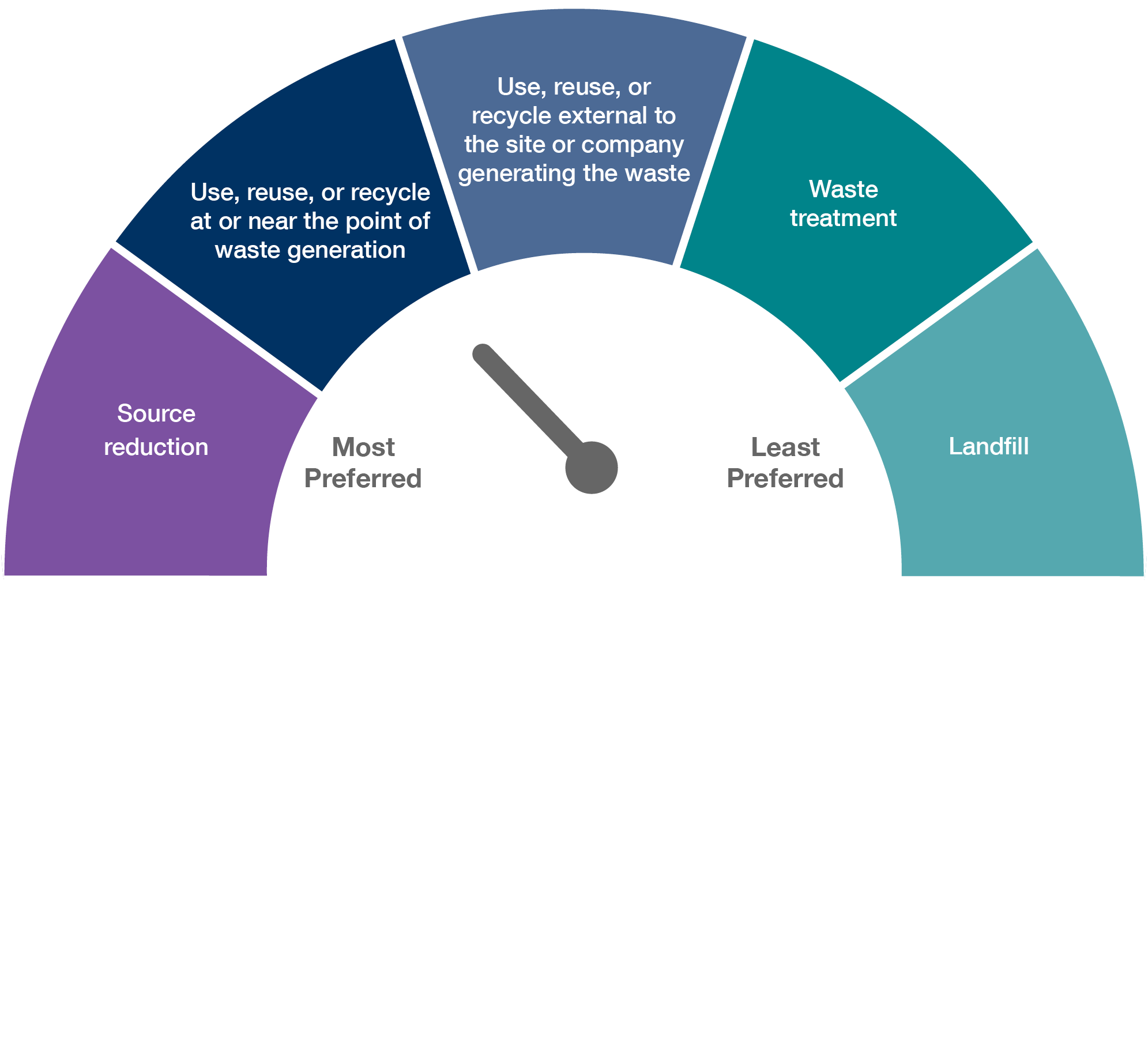
Huntsman’s waste management strategy includes, in preferred order: elimination and minimization of waste generation through process design, plant operations and maintenance; recycling and reuse of usable materials to eliminate or reduce waste hazards and volumes. Incineration or disposal of wastes in landfills is considered only after all other options have been exhausted.
In addition to managing our operational wastes, Huntsman strives to improve resource efficiency throughout the value chain. For example, our TEROL® polyols use PET waste to create MDI. Downstream, our solutions make products more durable, and by extending the life of our products, they contribute to waste reduction.
Waste Minimization Hierarchy
2021 Total Waste Intensity
2021 Hazardous Waste Intensity
4%
52%
1
2
lower than 2019 baseline
was 0.1250 tons per ton of sold product
was 0.0250 tons per ton of sold product
higher than 2019 baseline



Examples of waste reduction activities
Huntsman Textile Effect plant in Mexico
A wastewater improvement project enabled a 50% reduction in our solid waste disposal.
Huntsman Performance Products site in Llanelli
The installation of new aeration in a reed bed system allowed for passive treatment of effluent in an environmentally friendly manner and reduced the amount of waste incinerated.

in Total Waste and Hazardous Waste Generated Intensity
Horizon 2025 target

| GRI 3-3 | GRI 306-1 | GRI 306-2 |
Our Approach
Our Horizon 2025 goals include a target to reduce both our 2019 total waste and hazardous waste intensity by 5% by 2025.
Working to achieve this goal supports our longer-term
aspirations toward circularity. We continually look for ways to reduce waste and improve operational performance. We regularly complete audits to inspect external waste management plans and ensure that our waste is disposed of in accordance with contractual or regulatory obligations.
Our sites measure, confirm, and report hazardous and non-hazardous waste volumes generated, volumes and types of
recovery operations used for waste diverted from disposal, and volumes and types of disposal operations for wastes directed to disposal for on-site operations. Some waste diverted from disposal is incinerated in an energy recovery process that provides heat for other processes, reduces additional fuel required, and lowers impacts to the environment. All forms of waste are converted to metric tons, using standard conversion factors. Waste volumes generated are divided by sold production to determine intensity.
Huntsman is committed to resource efficiency in our operations, including preventing and reducing both hazardous and non-hazardous waste.
Huntsman 2021 Sustainability Report 56